What art direction actually means for a release, an event, or a brand
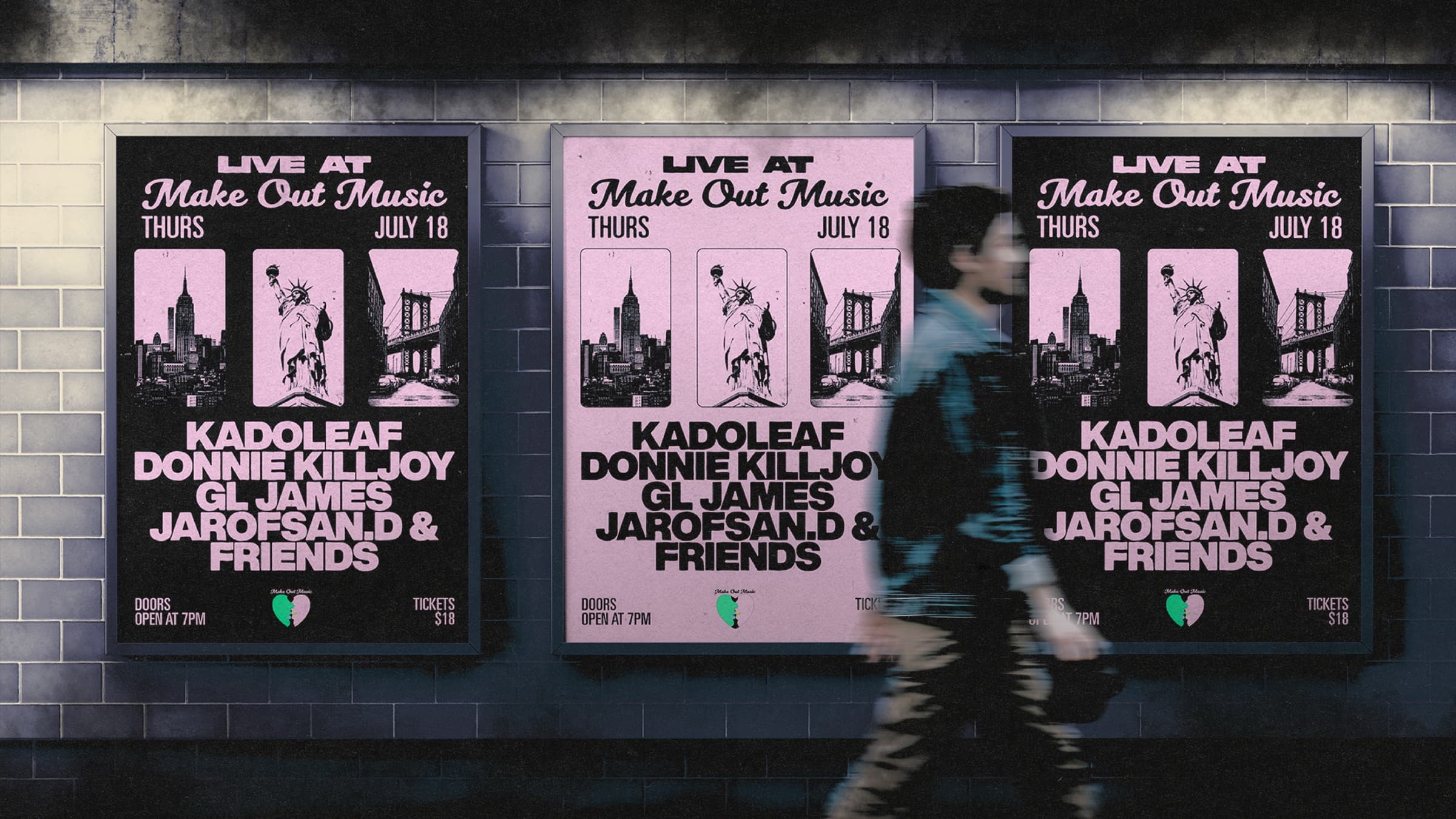
Art direction gets described as 'making things look good.' That is not what it is. It is building the system that decides what everything looks like before anyone opens a file · the references, the type logic, the color rules, the hierarchy · so that a poster, a cover, a tee, and a banner all read as one thing without anyone having to manually match them.
The project changes. The discipline does not. Here is how it plays out across a music release, a live event, and a brand rooted in culture.
For a music release
The cover is not the campaign. It is the seed of it. Designed well, the three-color system on a front cover travels to the back, to the vinyl pressing, to the merch, to the Spotify banners, to the Out Now videos, to the social cuts. On drop day, every surface reads as one record.
Designed as a one-off image, it cannot extend. The label tries to adapt it to a tee and the proportions collapse. The DSP team makes a banner and it looks like a different release. You end up with one strong visual and five inconsistent ones around it.
For The Sins I Prayed For, the direction phase came first: what does this record feel like, what references earn that feeling, what are the three things we do not break. The cover followed. Then the system traveled. That is what direction buys you · not a better cover, but a release that reads as a whole.
The cover is not the campaign. It is the seed of it.
For an event or festival
A festival or event has more surfaces than a release and less time to establish coherence. The poster is the most visible artifact, but it is not the only one: wristbands, tickets, stage backdrops, crew tees, media passes, social assets, signage. If those were all briefed separately, you get a collection of references. If they come from one direction, you get a world.
For Make Out Music Festival, the identity ran one visual language: hand-set type, silhouettes, a restricted palette. It survived every format the night threw at it · from the wheatpaste on the street to the wristband at the door to the tee the morning after · because the rules were set before production, not negotiated per asset.
That is the real argument for direction on an event: not aesthetics, but consistency under production pressure.
For a brand rooted in culture
A clothing brand, a label, a venue, a creative studio · any project that sits at the intersection of music and culture has to carry a visual language across more surfaces and more time than a release or an event. The stakes are different. A bad cover hurts one release. A bad brand direction follows everything.
For DSCNCTD, a streetwear brand rooted in music culture, the direction defined what the brand was allowed to look like before the first garment was photographed: the type system, the photography style, the editorial pacing. The lookbook, the product page, the campaign assets all came from that. A customer who encountered the brand through a social cut and landed on the site saw one coherent world, not a series of deliverables.
The process, regardless of project type
- Direction phase · references, mood, rules, what we will not do · locked before any file opens. This is the most important step and the one most often skipped.
- System definition · type, color, hierarchy, layout logic · the decisions that every future asset inherits.
- Production · covers, posters, assets, campaign materials · built from the system, not against it.
- Delivery · source files, formats for every surface, rules your next collaborator can follow.
What is the difference between art direction and graphic design?
Graphic design executes. Art direction decides what to execute and why. In practice, a designer makes a poster. An art director defines what the poster must communicate, what it should feel like, and what rules it cannot break · then either designs it or briefs someone who does. At HBLR, both happen in the same studio.
Do you need art direction for a small release or event?
Smaller scope does not mean direction is optional. A single cover designed without a system cannot extend to a tee or a banner. A festival poster designed without a language has nothing to hand off for wristbands and signage. Even small projects benefit from a brief direction phase · it costs less time than fixing inconsistency later.
Do you work with brands that are not music artists?
Yes. The studio works with labels, festivals, venues, promoters, and culture-driven brands · any project where the visual world has to hold across releases, campaigns, events, and platforms. The discipline is the same regardless of whether the client is an artist or a brand.
How long does an art direction project take?
A direction phase typically runs one to two weeks for a release or event identity. Full campaign production follows from there. Tight release and event deadlines are normal and respected · and a well-run direction phase makes the production phase faster, not slower.
A release, event, or brand that needs a visual system?
Tell us what you're building →